


Beetles return, plants hesitate: What remains after the invasive Black locust

Invasions of exotic species are a major threat to biodiversity both in our country and worldwide. Exotic trees and shrubs, in particular, can completely alter environmental conditions and displace native plants and animals. One of the most problematic species is the black locust (Robinia pseudoacacia), a tree originally from North America that spread massively across Europe during the 20th century. It poses a serious problem in protected areas, yet its removal is not straightforward. The Podyjí National Park Administration and the Prague City Hall were among the first institutions to undertake its systematic removal, and it was at their sites that the research took place. However, new findings show that simply cutting down black locust does not automatically lead to the recovery of native forests.
Invasions of exotic species are a major threat to biodiversity both in our country and worldwide. Exotic trees and shrubs, in particular, can completely alter environmental conditions and displace native plants and animals. One of the most problematic species is the black locust (Robinia pseudoacacia), a tree originally from North America that spread massively across Europe during the 20th century. It poses a serious problem in protected areas, yet its removal is not straightforward. The Podyjí National Park Administration and the Prague City Hall were among the first institutions to undertake its systematic removal, and it was at their sites that the research took place. However, new findings show that simply cutting down black locust does not automatically lead to the recovery of native forests.
Scientists and conservationists from the Czech Republic, Slovakia, and Hungary investigated what happens to forests after black locust removal. They focused on changes in soil, understory vegetation, and beetles associated with dead wood. They compared native oak forests, living black locust stands, dead stands following herbicide application, and sites where dead black locust trees had already been removed.
“Black locust is a useful tree. However, in ecologically valuable sites it displaces native, often endangered plants and animals. We are now correcting the mistake of our predecessors, who planted it in good faith without knowing its negative impacts,” says Jiří Rom, a specialist in protected area management from the Greenery Care Department of the Prague City Hall.
“Black locust tends to spread aggressively. In Podyjí, it poses the greatest threat to open-canopy forests and steppe habitats. It is extremely persistent, and its eradication is very demanding,” says Robert Stejskal from the Podyjí National Park Administration. “We have a great deal of black locust in Podyjí and are gradually trying to eliminate it, although so far only in selected priority areas. Naturally, we were interested in what happens after its removal,” he adds.
A team from the Institute of Botany and the Biology Centre of the Czech Academy of Sciences monitored how plants and beetles recolonize areas after black locust removal at eleven sites in Bohemia, Moravia, Slovakia, and Hungary.

Left: Original light oak forests boast a species-rich understory (Photo: Jiří Rom). Right: The understory of black locust stands is poor; mainly plants such as nettles or bedstraw survive here, as they tolerate excess nutrients (Photo: Zuzana Chlumská).
“The soil ‘remembers’ black locust long after the trees are gone. With the help of symbiotic bacteria, black locust fixes atmospheric nitrogen and significantly enriches the soil with nutrients. As a result, the understory of black locust stands is dominated by a few common species, such as nettles, which thrive in nutrient-rich conditions. These elevated nutrient levels persist for several years after the trees die or are removed,” explains Vojtěch Lanta from the Institute of Botany of the Czech Academy of Sciences, the study’s lead author. “The excess nutrients hinder the return of native plants. Although vegetation shows signs of improvement, recovery is slow,” he adds.
Beetles, however, responded very differently. “Beetle abundance was lowest in living black locust stands. After removal, their numbers increased significantly, and their species composition became more similar to that of native oak forests,” says Lukáš Čížek from the Biology Centre of the Czech Academy of Sciences.
The study, recently published in the prestigious international journal Journal of Environmental Management, shows that while removing invasive black locust is a necessary step, it is not sufficient on its own. While animals can respond relatively quickly to environmental changes, the recovery of native vegetation is significantly slowed by the ‘memory’ of the soil. The authors therefore recommend combining black locust removal with additional measures, such as targeted sowing of native species, controlled grazing, or, in some cases, removal of the topsoil. Only such an integrated approach can ensure the long-term restoration of species-rich and stable forests.

Original light oak forests

Understory of black locust...
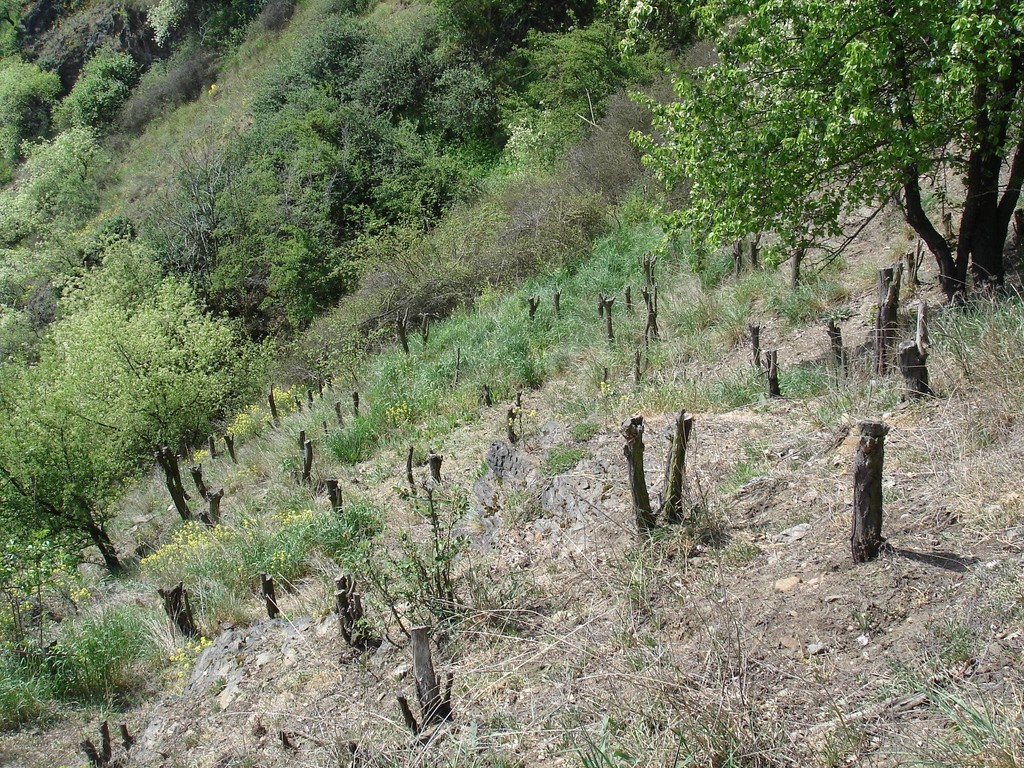
View of a black locust stand...
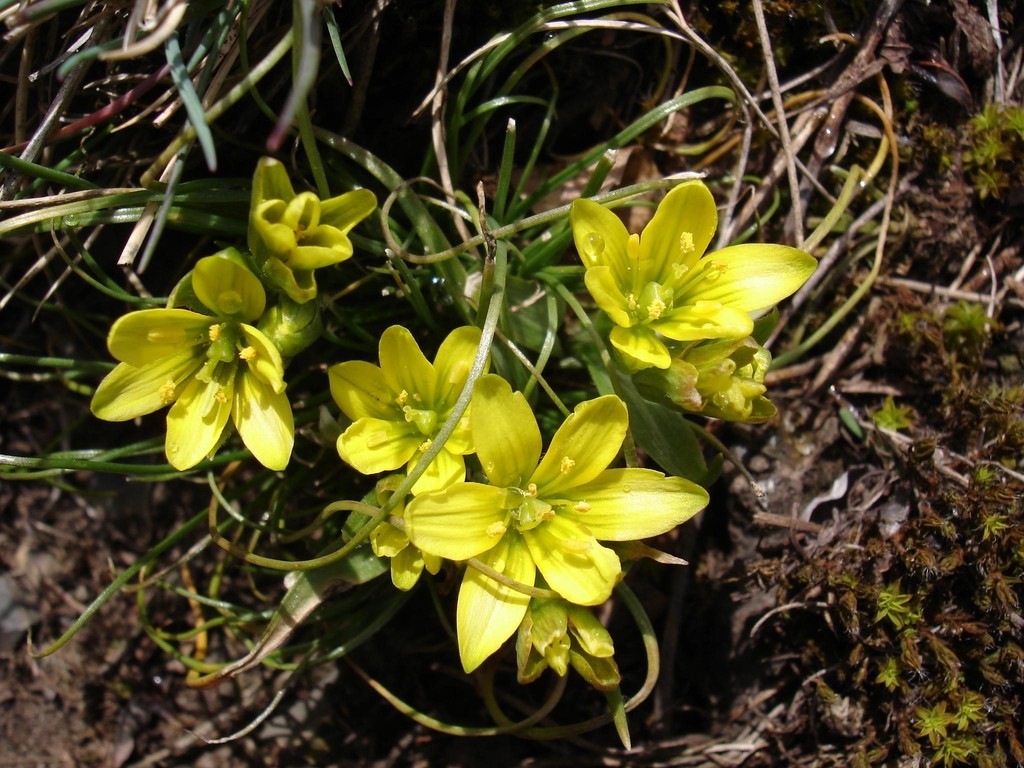
Gagea bohemica
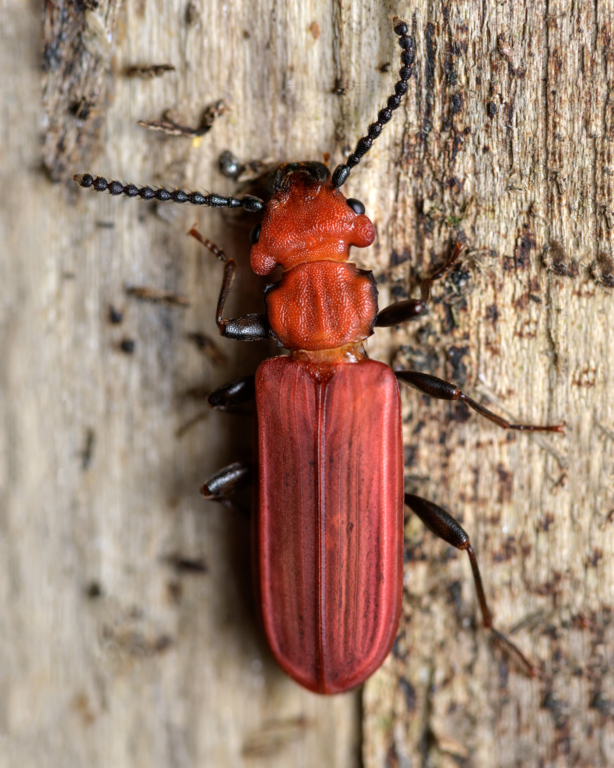
Cucujus cinnaberinus

Rare longhorn beetle Isotomus...


